A phone call concerning an arrest strikes like a shock. Courts proceed their very own timetable, tasks do not wait, and family members clamber to recognize unfamiliar guidelines in a high‑stress minute. Bail is the mechanism that connects that space in between apprehension and trial, and Bail Bonds are the most common way accuseds get out of jail quickly without publishing the total in money. The service exists for a reason, and it resolves genuine troubles. It likewise features trade‑offs that are simple to neglect in the thrill to get a liked one home.
I have actually sat at kitchen tables with households suspending every buck and weighing whether to sign a bail bond agreement that binds them to court days and security. I have seen the alleviation when a person leaves of a holding cell prior to daybreak, and the frustration months later on when unforeseen costs land or when a missed court day turns into a scramble. What adheres to is a clear‑eyed consider just how bail bonds work, when they make sense, and where they bring risk.
What bail is developed to do
Bail is not a penalty. The court sets a financial condition for launch to manage 2 concerns: will the accused stand for future court days, and do they position a risk to the area. Judges commonly make use of bond timetables as a beginning factor, after that adjust for the individual's history, the extent of the fee, ties to the community, and risk aspects. In some cases, individuals are launched by themselves recognizance without any money required. In others, the court enforces conditions like digital monitoring or medicine screening. When a cash money amount is set, it can vary from a couple of hundred dollars to six numbers or even more, depending on the territory and offense.
If an offender (or household) posts the full cash bail directly with the court and the defendant follows all conditions, that money is returned at the end of the situation, minus administrative costs in some places. Many families can not lock up a number of thousand dollars for months, particularly when legal fees and everyday expenditures mount. That is the gap the bail bond market fills.

How bail bonds work in practice
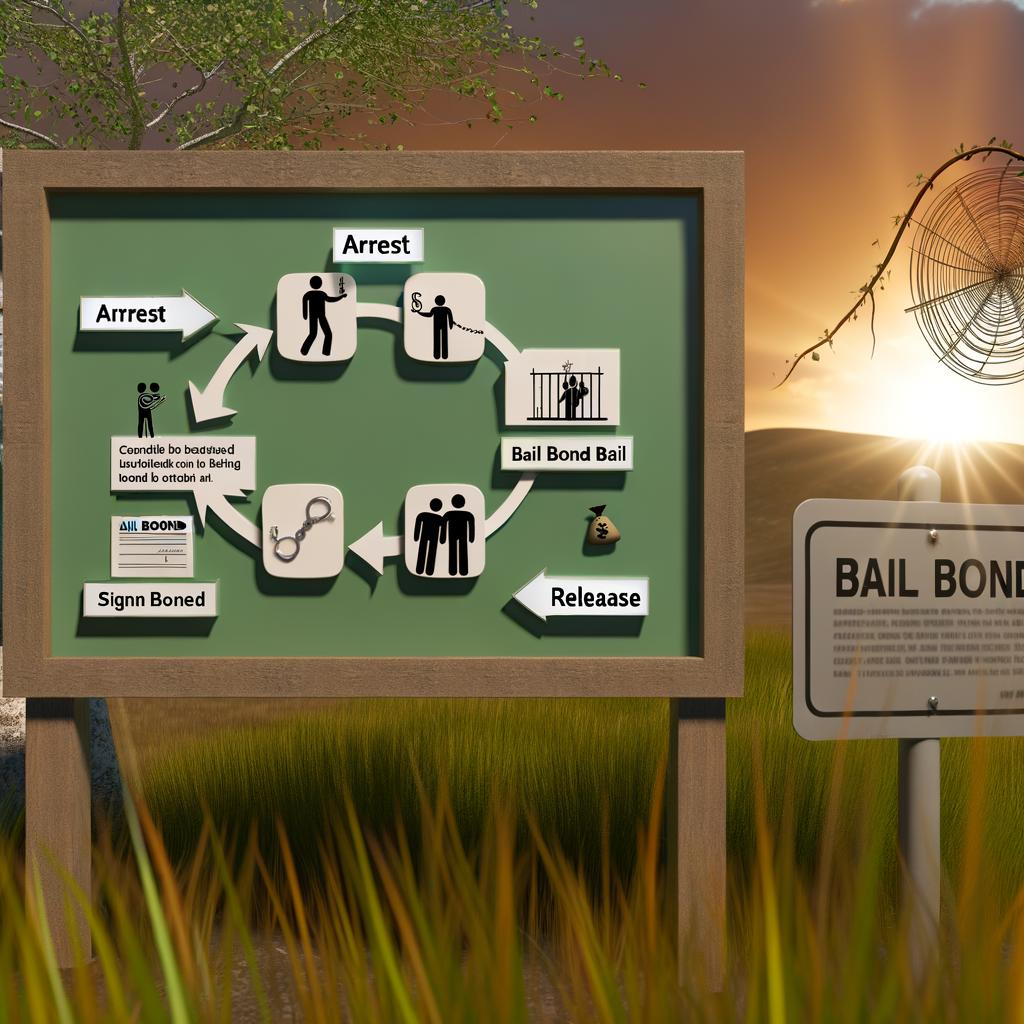
A bail bond is a pledge made by a qualified agent and their guaranty business to the court: if the accused fails to show up, the representative will pay the full bond amount. In exchange, the family pays a nonrefundable premium, usually a set portion of the bail. In most states, the basic premium is 10 percent, although rates from 7 to 15 percent show up depending on state law, fee kind, and risk. On a 25,000 buck bond, that indicates a 2,500 dollar cost to the bond agent. That cost is the agent's compensation for risk and service. It does not return, also if the situation is dismissed.
Agents typically ask for collateral to back the bond. Security can be a car title, a home action, fashion jewelry, or a co‑signer's individual assurance. The documents matters. Great representatives walk households through indemnity agreements that define that if the accused misses court and the court orders the bond surrendered, the agent can declare the security to cover the loss. Much less meticulous operators gloss over those details in the rush to shut. Make the effort to read. Request copies.
The mechanics move swiftly when a costs and security remain in location. The representative submits the bond with the prison, the prison processes the launch, and the offender walks out, frequently within a few hours. Weekend and nighttime releases rely on the jail's staffing. In hectic metropolitan centers, processing can extend to 8 to 12 hours even when the bond is posted right away. In smaller sized areas, I have seen releases completed in under 2 hours when everybody is aligned.
The heading advantages
Speed is the evident advantage. Since the bond representative vows the total to the court, the family prevents producing all the money. When a judge establishes bond on a Friday afternoon, a representative with connections at the jail can often post within the hour, which prevents spending the weekend in custody and missing out on Monday court or work.
Affordability is relative, but the in advance cash investment is substantially reduced. A family that could never produce 25,000 dollars may stretch to cover the 2,500 premium and established a layaway plan for part of it. Many Bail Bonds firms accept charge card, Zelle, cashier's checks, or a mix, together with collateral. For people on paycheck cycles, agents often split the premium into a down payment and weekly installments. You must expect a credit score check or verification of employment if you opt for payments.
Knowledge is the underappreciated advantage. Knowledgeable agents recognize each jail's intake traits, which court is most likely to accept a trademark from a notary versus an in‑person confirmation, and what documents speed up things up. When a judge permits a property bond as opposed to cash money, agents can direct families to a title company that can tape a lien within a day, which prevents a much longer remain in protection. Great representatives additionally train accuseds on reporting routines and suggestions. An easy text the day before court has actually maintained many individuals from inadvertently missing out on appearances.
Finally, bond allows individuals to keep their lives relocating while the case advances. Pretrial imprisonment can imply lost jobs, custody complications, and stress to accept a fast appeal to get out. Release via a bond maintains take advantage of from tilting against the defendant just because of destitution or logistics. It additionally allows an accused take part actively in their protection: meeting with counsel, gathering documents, or arranging therapy if that helps the case.
The genuine prices and commitments
The premium is permanent. Family members in some cases think about bail as a down payment, money that comes back at completion. With a bond, the costs is the cost of the service. The agent handled threat and logged hours to safeguard the launch, so the cost remains earned even if the district attorney disregards fees at the very first hearing. If money is exceptionally tight and the bond quantity is reduced, posting cash money straight with the court might be smarter. On a 500 dollar bond, paying 50 bucks in court charges and obtaining 450 back months later could beat a 50 to 75 dollar nonrefundable bond costs. Scale matters.
Collateral is not abstract. When you authorize an indemnity agreement and promise a cars and truck or home, you are offering the agent the right to declare that residential property if the defendant avoids court and the bond is waived. Agents rarely want your property. They want the defendant to show up and the bond to be pardoned. Still, repossessions and liens occur in real cases. I have seen holiday wrecked by a surprise tow vehicle since a co‑signer ignored mail. If you pledge collateral, line up every person on the schedule of court dates, that will take care of tips, and what occurs if the accused moves.
Contract terms can include prices. Lots of agreements include reinstatement costs if a defendant misses out on court and the agent needs to submit a motion to renew the bond after the court issues a bench warrant. I have actually seen reinstatement charges between 100 and 300 dollars in several markets, plus messenger prices to relocate documents quickly. Some firms add weekly monitoring charges for accuseds considered greater risk, essentially little guidance costs. Others charge for GPS ankle monitors if the court needs them. Prior to finalizing, request a line‑by‑line description of every possible fee, including what triggers it and how frequently it applies.
Privacy is limited. When you authorize a bond, you consent to the agent calling you, seeing your house, and validating work. If a court date is missed out on, agents or healing workers might call family and friends to find the offender. For most families, the agent's participation is light: reminders, check‑ins, and a call from time to time. In failure‑to‑appear circumstances, anticipate persistent call. If you choose to keep your address exclusive from any individual however the court, a money bond stays clear of the third‑party layer.
Legal limitations and state differences
Bail is a state‑driven system, and rules differ extensively. 4 points often tend to surprise families going across region or state lines.
Premium rates are frequently taken care of by regulation. In numerous states, representatives can not mark down listed below an established portion without breaching insurance guidelines. Be unconvinced of representatives marketing prices far listed below the criterion. Either the quote is an intro that excludes obligatory charges, or the agent may reduce edges that come back to haunt you.
Some states have removed cash money bond for low‑level offenses or executed risk‑based release systems. In those jurisdictions, a bond might not be needed for misdemeanors with low flight risk. Always ask a defense lawyer whether the judge may launch the person on their own recognizance at the following hearing. Paying a premium when release was likely anyhow is an avoidable expense.
Co endorser responsibilities can last with charms. In some places, the bond remains active until sentencing or the resolution of an allure. In others, it is vindicated when a decision is returned. Check out the condition that specifies when the bond finishes. I have seen co‑signers assume their threat ended after arraignment, only to discover the bond continued for months.
Recovery techniques are managed. Bond representatives or their contractors might command to find and give up an offender to prison if they skip court. States limit when and exactly how agents can enter residential property, transport offenders, or make use of force. Ethical representatives comply with the policies carefully and collaborate with local law enforcement. If you hear promises that entail strategies that seem like flick scenes, stroll away.
Practical choice points for families
Imagine your sibling calls from the county prison. Bond is evaluated 15,000 bucks. You have 3,500 across two accounts and an auto worth around 6,000. The public defender claims accusation was continued to Monday, 48 hours away. Here is how to think through the options.
Start with the timeline. If launch through the bond can take place tonite, that can protect against extra days in custody. Lost changes over the weekend might set you back 300 to 500 bucks, and jail conditions weigh on people quickly. On the other hand, if the prison is backlogged and launch will certainly not process before Monday anyway, ask the attorney to request a release on recognizance or a bond reduction at the hearing. It may not function, yet judges often reconsider bond when they learn more concerning ties to the community.
Weigh the cash money versus bond. If you can publish the full 15,000 in money, it locks up funds for months however comes back if every court date is fulfilled. If the money will certainly compel you to miss out on rent or childcare, the bond premium of about 1,500 is the safer option, although it will certainly not return. If the bail had actually been 1,000 or 2,000, cash money could make more sense.
Gauge integrity. If your bro has a background of neglecting appointments, demand a structure: a common schedule, text pointers, and a dedication that he will check in with the representative weekly. If he has a tendency to move houses or work commonly, co‑signing subjects you to genuine risk. It is affordable to state no if you can not take in the worst‑case outcome.
Scrutinize the representative. 2 calls to reputable Bail Bonds companies inform you a great deal. Do they describe terms without pressure? Do they damage down charges plainly? Are they accredited in the state, with a visible certificate number you can get in touch with the insurance coverage regulator? Do they ask concerns about the situation and the individual, or do they chase your bank card info right away? The tone in that first discussion usually predicts the top quality of solution you obtain later.
Where bonds shine and where they drop short
Bonds shine when the bond amount is high sufficient to strain a family members's cash money, when time matters, and when the offender is dependable. I think of a customer apprehended on a warrant for a missed settlement on an old fine. The bail was set at 7,500. The household could have published cash money, but it would have cleaned out the emergency fund. The representative posted bond within 2 hours, and the customer was home that night to keep the next early morning's work shift. He did not miss a solitary look afterward, and the bond exonerated quietly at the end. The 750 costs was a reasonable profession for stability.
Bonds fall short when the case is likely to solve at the following hearing with a launch on recognizance, or when the bail is so low that the costs approaches what the court would have butted in costs anyway. They likewise fall short when the accused is unstable. In one issue, a family co‑signed for a cousin with without treatment psychological health and wellness concerns and a history of couch searching. He missed out on court, after that prevented calls for weeks. The representative submitted to waive the bond. The family members lost the cars and truck they had actually vowed. In retrospection, they would certainly have been much better off using that car as a resource to move him to solutions and letting the court process play out without a bond.
Working with a bond representative like a pro
Agents go to their finest when they run as companions with households. If you decide to make use of a bond, deal with the connection like a tiny task that needs structure.
- Gather the fundamentals prior to calling: complete legal name, scheduling number, date of birth, the prison's name, fees detailed, and the bail amount. The representative can stagnate without this data. Ask 3 concerns out loud and get direct answers: What is the costs and is it established by state legislation? What security is called for and when is it returned? What events set off extra charges and how much are those fees? Set up an interaction strategy with the offender and the agent: that obtains court tips, how often to check in, and what to do if a court date problems with job or medical appointments.
A little organization in advance avoids most frustrations later on. Representatives appreciate families that call with precise details and that connect promptly if issues arise. If a defendant is sick and can not appear, for instance, an agent can usually coordinate with advise to file an activity to proceed and avoid a bench warrant. Silence makes whatever harder.
Dealing with missed out on court dates
Life occurs. Web traffic, childcare emergencies, an outdated online calendar from the court. If a court date is missed, panic fixes absolutely nothing. The following steps are simple if you move quickly. Initially, call the defense attorney. Judges are much more going to remember a bench warrant if the lawyer asks without delay and provides a legitimate reason for the lack. Second, call the bail agent. Most agents can file a reinstatement or expansion and show the court that they are still managing the accused. This can keep the bond from being surrendered. Third, fix the underlying reason. If transportation is the issue, prepare an experience. If the day was unclear, call the staff and validate every future day in writing.
I have seen courts recall warrants within 24 to 48 hours when the accused provides themselves willingly and the representative signals proceeded support. I have actually additionally seen bonds waived when an accused vanishes for weeks. Time and communication are the difference.
Special instances and side conditions
Property bonds can replacement for money or an industrial bond in some regions. If a home has adequate equity, the court videotapes a lien and launches the defendant. The advantage: no premium. The downside: paperwork and delays. Recording a lien needs title job, signatures from all proprietors, and coordination with the area recorder. For family members not in a thrill, this can save thousands. For those trying to stay clear of a weekend break in custody, it is generally as well slow.
Federal situations run on various regulations. In government court, guaranty bonds and signature bonds often change business bonds. Juries look for accountable third‑party custodians and may call for conditions like home detention, curfews, or travel constraints. Business bail bonds play a smaller sized role in the federal system. Defense attorney is the most effective guide here.
Immigration detainers complicate every little thing. If the prison holds an accused for migration authorities, posting a bond on the criminal instance might still leave the person in custody on the hold. Agents who understand the local relationship between the prison and migration can advise whether a bond attains release or otherwise. Ask directly if any detainers are in place.
Common misunderstandings that drain wallets
One misconception that continues is that paying a higher costs speeds up launch. Rate depends on how promptly the agent messages the bond and how quick the jail processes it, not the percentage you pay. An additional false impression is that showing up for every court day automatically returns security the next day. In reality, the court must pardon the bond via order. Agents then release security after they get official notice. That can take one to three weeks, relying on court efficiency.

Families also underestimate just how commonly courts change days. Plea arrangements increase, a judge's schedule shifts, a prosecutor is inaccessible, or the court moves hearings without clear notice. Offenders should verify upcoming days straight with the staff, not depend only on a public website. In a number of regions, on-line portals lag by a day or more. A two‑minute call protects against most surprises.
When to miss the bond altogether
Sometimes the strongest move is to wait on the following hearing and ask for launch without economic conditions. This is most viable for low‑level offenses, very first apprehensions, and individuals with deep connections: long‑term employment, youngsters in school, real estate stability. Defense lawyer can provide letters from employers or community participants, evidence of residence, or treatment registration to bolster the request. Courts are not uniform, however they listen. If the person can endure 24 to 48 even more hours in custody and the lawyer thinks release is likely, saving the costs might be wise.
Another moment to miss a bond is when the family members lacks steady collateral and can not manage the premium without endangering essentials. If paying a bond suggests missing rental fee or losing child care, the downstream damage can exceed the benefit of a fast release. In those cases, work with the attorney on a bail decrease motion, or ask about pretrial solutions programs that monitor launch at reduced or no cost.
Ethics, reforms, and what that means for you
Bail reform is an online dispute, not an abstract plan fight. In numerous states and counties, reforms have minimized reliance on cash money bail for lower‑level charges, broadened pretrial solutions, or mandated quick hearings for bail reductions. Where reforms work well, less people are held exclusively because they can not manage release, and court appearance prices remain steady. Where reforms are uneven, households face jumble rules that differ across nearby counties.
The ethical question for family members is narrower: how to safeguard launch without risking monetary ruin. Select representatives who deal with accuseds with self-respect. Avoid any type of company that pressures you to sign before you recognize your commitments. If an agent defames attorneys, the court, or rivals as a primary sales strategy, that is a red flag. Expert agents recognize their role: to publish bonds, to maintain lines of communication open, and to go back once the bond is exonerated.
A straightforward structure for a high‑stakes choice
- Can you afford the premium without running the risk of real estate, food, or important bills, and is collateral risk appropriate to every person that has it? Is prompt launch most likely to prevent job loss, kid custodianship complications, or wellness injuries that outweigh the cost of the premium? Is the defendant arranged and obtainable, with a strategy to participate in every court day and adhere to conditions? Has an attorney evaluated the possibility of recognizance release or a bail decrease at the next hearing? Have you vetted the Bail Bonds representative for clear terms, licensure, and responsiveness?
Five truthful solutions offer you the appropriate course usually. If the majority of responses are of course, utilize a bond. If numerous are no, pause and reassess with counsel.
Final thoughts from the field
Bail bonds exist since courts require monetary assurances and most individuals can not ice up large amounts for months. The service aids hundreds of households every year, and the alleviation of seeing somebody go out of safekeeping is actual. The cost is likewise genuine: an irreversible charge, direct exposure through collateral, and consistent obligations till the court vindicates the bond. When households come close to the choice with eyes open, ask sharp inquiries, and collaborate carefully with the defendant and the agent, the threats are manageable.
I have viewed cases go smoothly due to the fact that a sister kept a straightforward folder with court notices and receipts, called the agent if schedules https://jsbin.com/fucelotofa altered, and insisted her sibling set alarm systems for every single day. I have additionally viewed cases unwind because no one wanted to press a relative to adhere to guidelines he did not such as. Bail bonds are tools, not magic. Used meticulously, they protect work, family members, and the capacity to combat an instance from the exterior. Used delicately, they can transform a stressful week into a long‑term monetary burden.
Approach the option with quality. Comprehend the legal surface in your region. Talk with the defense lawyer before you dedicate. If a bond lines up with your requirements and capabilities, collaborate with a specialist Bail Bonds company, read every page, and maintain the interaction lines open up until the bond is vindicated and the collateral is back in your hands.